industry
·
codeTakeaways from Laracon AU 2026
industry
Est. Reading Time: 6 minutes
By Lachlan Rehder
Published On Invalid DateTime
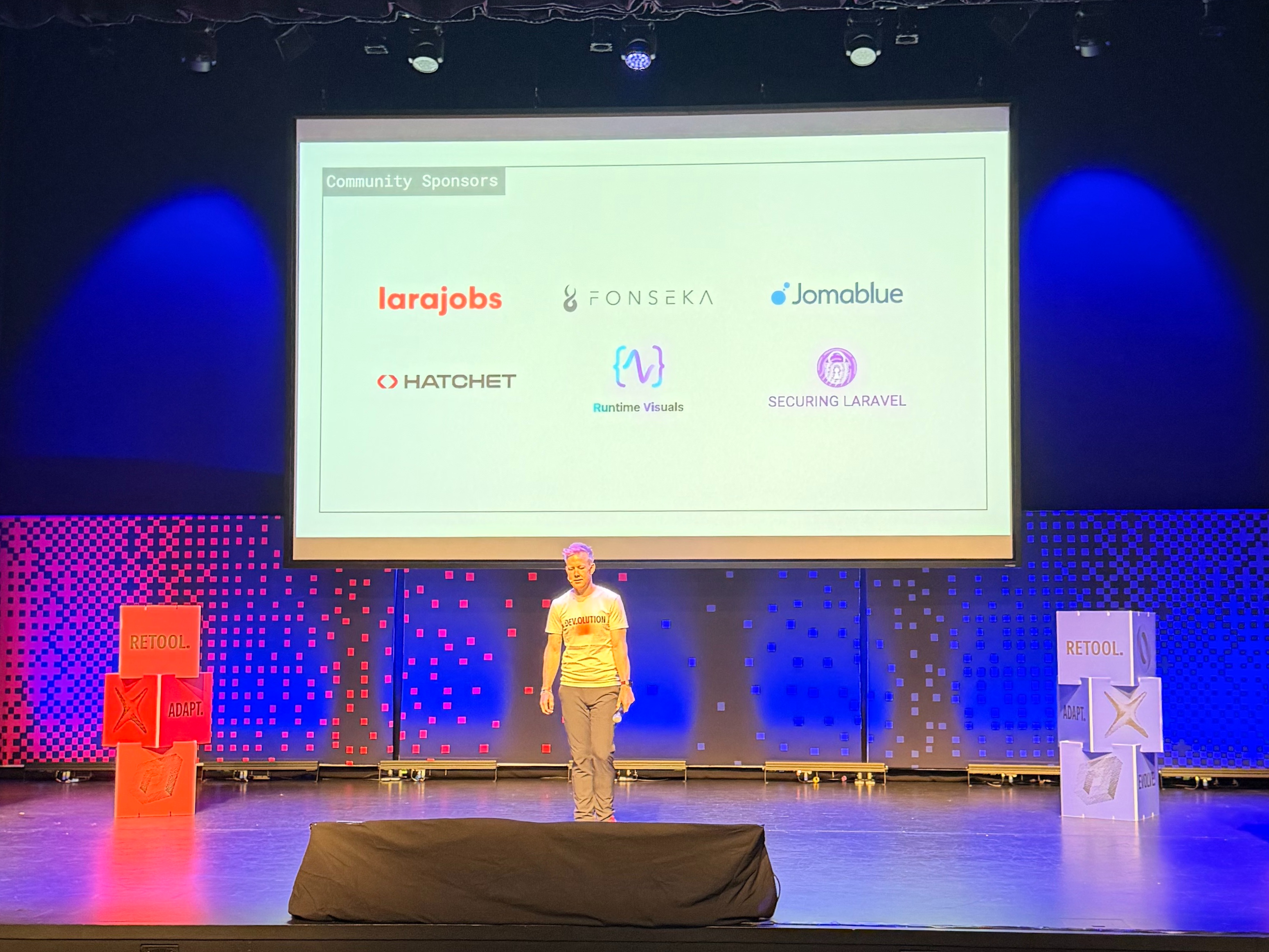
Laracon AU once again returned to Brisbane in 2026, this time with talks focused on the dev-olution: our industry is changing, how do we change too? With a focus on more technical talks this year, let’s take a look at those which captured some of the most important discussions of modern day software development.
AI is writing more of our code, but it’s also making more of our decisions. And that makes sense: to reach the promise of AI-powered efficiencies, we must relinquish some control over what our agents do. So as we speed up, how can we maintain the same safety standards we’ve built up over past decades?
It’s that question which Greg Skerman poses, with a direct comparison in the world of F1. Because despite the Grand Prix features dozens of cars travelling at hundreds of kilometres an hour, fatalities remain rare.
F1 didn’t get there by taking the same rules we have on the road and hoping for the best. They reimagined their safety systems and continue to iterate with pace so the sport is always becoming safer.
It’s this mentality we need with AI, because our old safety systems aren’t equiped to handle this new world order. In 2026 we shouldn’t blindly trust standard access control, a rulebook and assumptions to guardrail AI. A lot of this space is unknown, so its up to us to experiment, get it wrong, and most importantly, learn.
Considering what the PHP and Laravel communities just went through, this talk was aptly timed. Because as AI makes theorising, validating and executing exploits far quicker and more accessible, we must be prepared for the vulnerability onslaught arriving on our shores.
Sam Levy showed us exactly how that can play out. One minute you’re optimising a feature, and the next an attacker is inviting themself as admin, performing XSS attacks and making a dump of your database. With our friendly neighbourhood hacker Valorin performing these attacks live on stage, it’s easy to see how these things can spiral.
The crux of this talk was to get you to think about your own practices and assumptions. Sam showed how deeper questioning could have prevented these issues. Questions like:
As software development becomes less code-writing, we must stay aware of what code is entering our codebases. And as AI is super-powering vulnerability discovery, taking the time to get things right is becoming more important than ever.

Have you ever found yourself unable to brain? Stuck on a problem that feels like you’re going around in circles with no end in sight? I’m sure we’ve all been there: you feel blocked and can’t see a path forward.
Thankfully, Dr. Jaz MacDonald brought us some answers. She explained the solution is often to go do something else — something where you can use a different area of your brain and give the overworked part a rest. Once rested, that part can continue to work in the background to find a solution.
Jaz’s talk is especially important considering AI is starting to intensify work and raise expectations rather than alleviate pressure on workers. As more of our tasks require a higher cognitive load, burnout becomes a real risk. Instead of powering through or hoping it’ll ease with time, the real solution to fatigue can be as simple as taking a break.

We’ve heard efficiency promises of the AI revolution, and now we’re starting to experience them. But there is one question that has remained largely unanswered: when AI is writing the code, how strict should we be about what “good” and “bad” code is?
Matt Stauffer described a feeling he’s increasingly been having in changes he’s reviewed: the code works, but something feels off. It’s that feeling his talked drilled down on, and why keeping your code quality taste is more important than ever. He also made the excellent point that now AI is making the writing faster, we now have more time to interrogate its work, request changes and raise our own code quality standards.
The scope of what AI does for us is only going to grow, and that shouldn’t be an excuse for us to take our hands off the wheel and distance ourselves from the actual work being done. Because it’s one thing for the code to work, but a whole other if its poor, inexact, unmaintainable or outright nonsensical. So whether it’s writing code or designing a site — or any other task experiencing an AI makeover — we now have more time to get it right.

Traditionally, in the Laravel world, we have two kinds of testing: unit tests for self-contained logic and feature tests for processes that string operations. When writing these tests, coverage has become a de-facto metric of ‘completeness’. But there’s a fundamental problem: coverage shows us which code was run, not which logic has been validated.
[With coverage], you only know what is definitely not tested. It cannot prove what code is properly tested.
— Joel Clermont
To catch logic gaps in tests, Joel introduced us to mutation testing: a different kind of testing which make small mutations to the code itself to see if any tests caught the error. It automates a process some of us already do — making sure breaking your code breaks the tests — and scales it up to your entire codebase.
For codebases with little existing code coverage, mutation testing isn’t going to help; it’s better to spend your time testing code that’s currently an unknown. But for projects approaching full coverage, this kind of testing will help take your current suite to the next level. You can gain visibility over the core question Joel posed — one at the crux of whether a test suite is actually useful: if a bug is introduced into your codebase, will your tests catch it?
Laracon AU delivered once again this year, with insightful talks throughout the two days. These highlighted talks are only the surface of the value Laracon brought this year — check the rest out when they’re published in due course, likely to YouTube. FONSEKA are proud to have been community sponsors this year, and we are looking forward to seeing what Michael and the team will be cooking up for 2027!
In the meantime, if you’re looking for bespoke application development from a team that actually gets you, let’s chat! FONSEKA take the time to fully understand your business to tailor solutions to you, so you get the most out of your software. See why we’re a great choice and book a free 30-minute technical consult today.
Subscribe to get the best and most popular insights each month